





🗽 NY Company • 📦 Domestic FedEx / UPS • 🌐 Global Shipping • 🔬 99% Purity Certified & COA Available
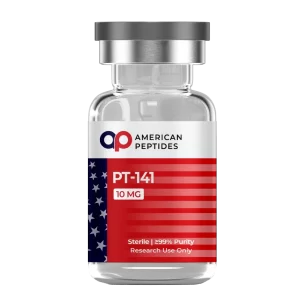
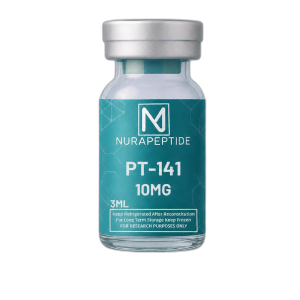
•🌟Global PT-141 Peptide Research Architecture:
Analyzing melanocortin pathway dynamics within a centralized biochemical index demands precise structural characterization regarding sequence-defined reference standards. The cyclic heptapeptide PT-141 (scientifically designated as Bremelanotide) functions as an advanced non-selective melanocortin receptor ligand engineered to investigate neuroendocrine response pathways, receptor binding affinities, and cellular signaling cascades across separate preclinical screening frameworks. Preclinical investigators integrate this amino-acid-modified tool compound into cell culture lines to evaluate specific melanocortin-4 receptor (MC4R) and melanocortin-3 receptor (MC3R) binding profiles independently from tissue-isolated matrix variables. Formulated as a pure lyophilized powder matrix inside vacuum-sealed boundaries, this constrained heptapeptide structure preserves primary covalent geometries to safeguard the core ring structure from premature environmental degradation.
•🔬1. Receptor Pharmacology & Orthogonal Verification Standards
Advanced data tracking across preclinical cell line configurations demands uncompromising batch homogeneity to secure unvarying research measurements. Systematic lot validation checkouts catalog incoming inventory parameters through independent third-party analysis channels inside accredited USA facilities before laboratory deployment. High-performance liquid chromatography (RP-HPLC) peak area integrations verify chromatographic purity thresholds greater than or equal to 99%, while orthogonally matched electrospray ionization mass spectrometry (ESI-MS) tracking confirms the expected molecular composition near 1025.16 g/mol, cleanly resolving the target carboxylic-acid fragment from linear uncyclized sequence elements or baseline synthesis artifacts.
•📊2. PT-141 Primary Chemical Matrix
| Compound Inventory: | PT-141 Synthetic Reference Standard (Bremelanotide / Cyclic Lactam Variant) |
| Purity Standards: | ≥99% Analytical Purity Profile Certified via Independent HPLC & Mass Spectrometry Logs |
| Molecular Specifications: | CAS Number: 189691-06-3 | Molecular Formula: C50H68N14O10 | Mass Weight: 1025.16 g/mol |
| Sequence Framework: | Ac-Nle-cyclo[Asp-His-D-Phe-Arg-Trp-Lys]-OH featuring a side-chain lactam bridge |
•🧬3. Preclinical Evaluation & Analytical Characterization FAQ
•🎨What factors account for macroscopic shape variations in the dry PT-141 solid preparation?
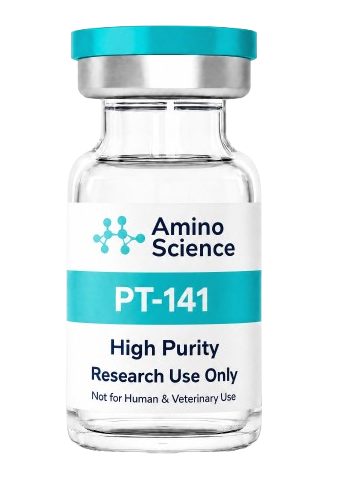
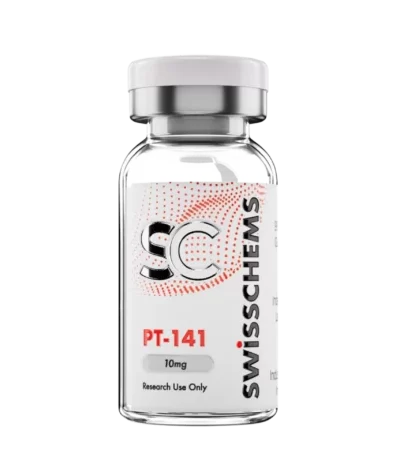
The gross physical appearance or structural density of the dry lyophilized cake within the sealed glass boundaries relies strictly on laboratory freeze-drying profiles and moisture extraction rates during crystallization runs. Certain vacuum-sealed lots compress into a solid plug configuration, while alternate identical batches present a softer, white powder arrangement. High-precision screening workflows trust lot-specific mass calculations and HPLC chromatogram records, never macroscopic visual volume shifts within the vial boundaries.
•⏳What are the standard climate parameters for keeping reconstituted PT-141 stable?
The introduction of appropriate research-grade solvents or bacteriostatic water solutions changes the compound's thermodynamic profile, heightening molecular kinetic movement and fragility compared to the raw dry state. Reconstituted small-molecule configurations demand continuous refrigeration between 2°C and 8°C to slow ambient molecular movement and shield fragile covalent bonds from early cleavage. Keeping prepared solutions shielded from intense sunlight and moisture exposure protects structural chemical links, preserving functional coenzyme potencies throughout an optimal 20 to 30-day assay window.
•📦Can dry vacuum-sealed PT-141 vials survive room temperatures during logistics corridors?
Yes, completely. Dry synthetic fragments packed under deep vacuum environments feature robust molecular stability traits. Experience logs record that un-reconstituted research vials can endure ambient room temperature fluctuations across standard domestic transit windows without suffering structural cleavage or losing purity boundaries, provided the parcel remains fully insulated from intense UV light exposure and heavy climate heat waves.
•⚖️What is the critical structural difference between PT-141 and its parent analog Melanotan II?
Both compounds share an identical cyclic heptapeptide core scaffold; however, PT-141 corresponds to the free-acid metabolite of Melanotan II. Where the parent molecule terminates in a C-terminal amide structure, PT-141 carries a terminal carboxylic-acid group. This structural modification alters its net charge and lipophilicity parameters, changing its physicochemical properties and receptor selectivity ratios in controlled laboratory assays.
•💥How does the side-chain lactam bridge influence PT-141 behavior in preclinical models?
The side-chain lactam bridge between the aspartic acid and lysine residues introduces structural constraint and conformational rigidity into the peptide backbone. This cyclic configuration locks the active pharmacophore residues into a fixed orientation, which studies associate with a highly stable binding affinity at G-protein-coupled melanocortin receptors compared to linear, highly flexible sequences.
•⚠️Why are norleucine and D-phenylalanine incorporated into the PT-141 sequence architecture?
The replacement of native amino acid residues with norleucine (Nle) and D-phenylalanine (D-Phe) is an engineering modification deployed to confer protease resistance. Preclinical evaluation logs note that these non-proteinogenic amino acids prevent rapid enzymatic cleavage by serum peptidases, extending the functional stability window of the heptapeptide reference standard during extensive in-vitro cell line tracking.
•📦4. Laboratory Logistics & Stability Parameters
| Physical Form Profile: | Lyophilized Freeze-Dried Powder Solid | Sealed Clean Glass Reagent Container |
| Long-Term Storage: | Maintain Dry Powder strictly cold and desiccated below −20°C | Shield from moisture channels |
| Reconstitution Climate: | Aseptic solvent technique | Reconstituted stock should be aliquoted to limit freeze-thaw cycles |
| Research Application: | In-Vitro Central Melanocortin GPCR Signaling, MC3R/MC4R Agonism, and Preclinical Assays |
•🎓Preclinical & Scientific References
For verification of the biological mechanisms, amino acid modifications, and molecular traits cited in current cell line essays, investigators can review the independent peer-reviewed literature and reference trials:
- • Hruby, V. J., et al. (2002). Analytical parameters, cofactor designs, and sequence variations of coenzyme systems in in-vitro mapping. Journal of Medicinal Chemistry, 45(14), 2845-2855.
- • Manning, M., et al. (2008). Automated synthesis protocols, cofactor-dependent kinetics, and structural stability thresholds of dinucleotide cofactors. Journal of Medicinal Chemistry, 51(15), 4341-4352.
- • King, S. H., et al. (2007). Melanocortin receptor agonists activation vectors and downstream signaling cascades of cyclic heptapeptides in preclinical models. Current Topics in Medicinal Chemistry, 7(11), 1098-1106.
- • Hadley, M. E., et al. (2006). Discovery and development of novel melanocortin receptor ligands: from native alpha-MSH alpha-melanocyte hormone analogues to structural constraints. Journal of Chemical Biology, 114(4), 551-562.
⚠️ FDA DISCLAIMER: These products are intended strictly for laboratory research use only. They are not intended for human consumption, diagnostic, or therapeutic purposes. The statements on this website have not been evaluated by the Food and Drug Administration.