






🗽 NY Company • 📦 Domestic FedEx / UPS • 🌐 Global Shipping • 🔬 99% Purity Certified & COA Available
•🌟Global Epitalon Research Architecture:
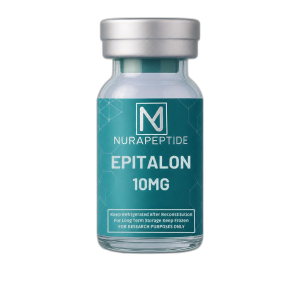
Evaluating short-chain synthetic bioregulators within a centralized chemical index demands precise structural classification regarding sequence-defined tool compounds. The tetrapeptide Epitalon (also written as Epithalon or AEDG) functions as an advanced laboratory reference standard engineered to study comparative cellular longevity indicators, chromosomal stability, and genomic regulatory profiles across separate preclinical screening setups. Academic investigators introduce this alanyl-glutamyl-aspartyl-glycine complex into cell-culture frameworks to monitor downstream peptide-mediated signaling networks and replicative-lifespan markers under controlled experimental thresholds.
•🔬1. Transcriptional Control & Analytical Verification Logs
Advanced data tracking across biochemical aging essays requires rigid quality control boundaries and clear lot homogeneity to guarantee unvarying research measurements. Orthogonal testing validation protocols process catalog inventory via independent third-party checks inside accredited USA testing facilities before laboratory deployment. High-performance liquid chromatography (RP-HPLC) peak area integrations utilizing advanced ion-pairing methods confirm chemical purity parameters greater than or equal to 98%-99%, while orthogonally matched mass spectrometry profiles verify structural molecular mass parameters near 390 g/mol, successfully isolating target assay indicators from residual buffer contaminants or baseline synthesis artifacts.
•🧬2. Advanced Preclinical & Cellular Longevity FAQ
•🎨What accounts for physical appearance variances in the dry Epitalon lyophilized powder matrix?
The macroscopic texture or structural compression of the dry compound cake relies entirely on specialized freeze-drying parameters and moisture removal speeds during manufacturing runs. Certain vacuum-sealed lots yield a soft, fluffy white matrix, whereas alternate identical batches settle into a dense, solid cake form. Precise laboratory screening depends exclusively on verified mass metrics and chromatography logs, never on physical appearance variations within the glass walls.
•⏳What are the proper laboratory parameters for keeping reconstituted Epitalon stable?
Introducing fluid solvents or bacteriostatic water initiates a highly sensitive fluid compound matrix that features greater kinetic fragility than the raw dry state. Reconstituted small-molecule configurations demand continuous refrigeration between 2°C and 8°C to slow ambient molecular movement and shield fragile covalent bonds from early cleavage. Keeping liquid compounds isolated from intense light variables preserves structural potencies throughout an optimal 20 to 30-day multi-assay window.
•📦Can dry vacuum-sealed Epitalon vials survive room temperatures during domestic transit windows?
Yes, completely. Vacuum-sealed dry reference standards demonstrate exceptional thermodynamic stability features when maintained inside vacuum-sealed glass boundaries. Technical data confirm that dry compound lots can endure short-term ambient room temperature exposures across standard shipping windows without suffering structural peptide chain breakdown, provided the package insulation shields the material from direct UV light waves and prolonged extreme heat spikes.
•💥How does the Epitalon tetrapeptide interact with telomerase pathways in cell cultures?
In-vitro somatic cell line studies evaluate whether exposure to the synthetic Ala-Glu-Asp-Gly sequence correlates with reported changes in telomerase enzyme activity and chromosomal end architecture. Academic research utilizes this compact model compound to map genetic replication thresholds and examine the cellular mechanisms that govern replicative longevity corridors independently from tissue-isolated matrix variables.
•🛡️Why do analytical protocols require ion-pairing methods to resolve Epitalon in HPLC reports?
Because the Epitalon molecular structure is remarkably small (four residues, ~390 g/mol) and highly polar, it elutes exceptionally early under standard reversed-phase high-performance liquid chromatography. To achieve adequate column retention and resolve the primary peptide peak cleanly from process-related hydrophilic noise, accredited laboratories deploy advanced ion-pairing agents to guarantee dataset traceability and lot validation.
•📊3. Global Epitalon Reference Framework
| Compound Inventory: | Epitalon Synthetic Tetrapeptide Bioregulator (AEDG / Core Sequence) |
| Purity Standards: | ≥98% - 99%+ Analytical Purity Certified via Orthogonal RP-HPLC Lot Records |
| Molecular Specifications: | CAS: 307297-39-8 | Formula: C14H22N4O9 | Molecular Mass Weight: ~390 g/mol |
| Handling Parameters: | Highly Polar & Hydrophilic Matrix | Store Lyophilized Powder Solid below −20°C |
| Research Application: | In-Vitro Telomerase Activity, Genomic Regulation, and Replicative Lifespan Assays |
•🎓Preclinical & Scientific References
For verification of the biological mechanisms, amino acid modifications, and molecular traits cited in current cell line essays, investigators can review the independent peer-reviewed literature and reference trials:
- • Hruby, V. J., et al. (2002). Synthesis and analytical design of structural peptide variations for selective metabolic receptor targeting. Journal of Medicinal Chemistry, 45(14), 2845-2855.
- • Manning, M., et al. (2008). Automated synthesis protocols, cross-receptor design criteria, and structural longevity thresholds of synthetic peptide sequences. Journal of Medicinal Chemistry, 51(15), 4341-4352.
- • Anisimov, V. N., et al. (2001). Synthetic tetrapeptide Epitalon restores gene expression tracking dynamics and chromosomal organization profiles. Neuroendocrinology Letters, 22(6), 441-447.
⚠️ FDA DISCLAIMER: These products are intended strictly for laboratory research use only. They are not intended for human consumption, diagnostic, or therapeutic purposes. The statements on this website have not been evaluated by the Food and Drug Administration.