


•🌟Global CJC-1295 + Ipamorelin Blend Research Architecture:
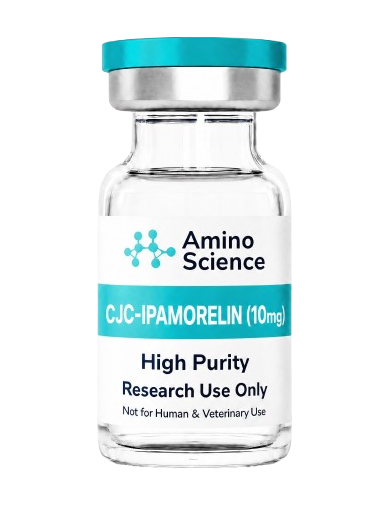
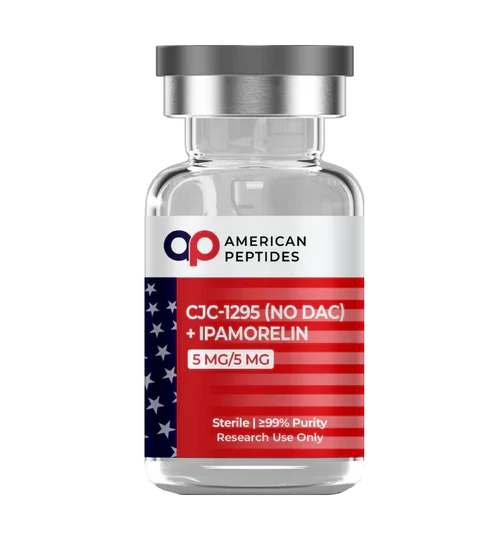
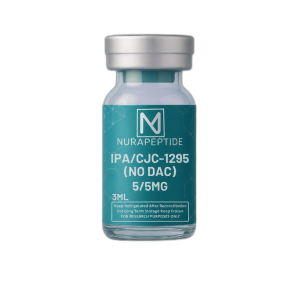
Analyzing somatotropic pathway co-activation within a centralized reference directory demands rigorous structural indexation regarding multi-peptide formulation matrices. The synthetic compound preparation combining CJC-1295 (No DAC) and Ipamorelin functions as a dual-action laboratory reference standard engineered to investigate independent receptor system networks, growth-hormone-releasing hormone (GHRH) signaling variants, and selective ghrelin/GHS-R1a pathways across separate preclinical screening setups. Preclinical researchers deploy this convergent peptide pairing within cell-free models to track pulsatile pituitary cellular cascades independently from confounding native homeostatic variables. Preserved inside stable vacuum boundaries as a single co-lyophilized dry cake, this balanced formulation protects fragile covalent links from ambient degradation before solutions compounding.
•🔬1. Receptor Selectivity & Orthogonal Purity Controls
Advanced data tracking across preclinical cell line configurations demands uncompromising batch homogeneity to secure unvarying research measurements. Systematic lot validation checkouts subject every incoming preparation to strict third-party verification testing inside accredited USA laboratories before catalog indexation. Reversed-phase high-performance liquid chromatography (RP-HPLC) peak area integrations verify per-component chromatographic purity profiles greater than or equal to 99%, while mass spectrometry tracks observed masses near 3367.93 for CJC-1295 (No DAC) and 711.85 for Ipamorelin, cleanly resolving both active structures from truncated synthesis fragments or baseline chemical artifacts.
•📊2. Blend Primary Chemical Matrix
| Compound Inventory: | CJC-1295 (No DAC / Modified GRF 1-29) + Ipamorelin Co-Lyophilized Peptide Blend |
| Purity Standards: | ≥99% Combined Purity Certified via Independent USA HPLC & Mass Spectrometry Logs |
| Molecular Identifiers: | CAS: 863288-34-0 / 170851-70-4 | Material Form: Hygroscopic Lyophilized Cake |
| Sequence Profiles: | CJC-1295: 29 Amino Acids (Linear GHRH analog) | Ipamorelin: 5 Amino Acids (Pentapeptide Ghrelin agonist) |
•🧬3. Preclinical Sinergy & Reconstitution FAQ
•🎨What factors account for macroscopic shape variations in the dry peptide solid matrix?
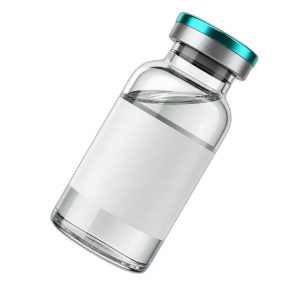
The gross physical appearance or structural density of the dry lyophilized cake within the sealed glass boundaries relies strictly on laboratory freeze-drying profiles and moisture extraction rates during crystallization runs. Certain vacuum-sealed lots compress into a solid plug matrix, whereas alternate identical batches present a softer, fluffy white cake arrangement. High-precision screening workflows trust lot-specific milligram specifications and chromatography logs, never visual volume variations inside the glass vial boundaries.
•⏳What are the standard climate parameters for managing fluid dual peptide combinations?
The introduction of appropriate research-grade solvents changes the compound's thermodynamic profile, heightening molecular kinetic movement and fragility compared to the dry cake state. Reconstituted small-molecule configurations demand continuous refrigeration between 2°C and 8°C to slow ambient molecular movement and shield fragile covalent bonds from early cleavage. Keeping prepared solutions shielded from intense sunlight and moisture exposure protects structural chemical links, preserving functional coenzyme potencies throughout an optimal 20 to 30-day assay window.
•📦Can dry vacuum-sealed combination vials survive room temperatures during logistics corridors?
Yes, completely. Vacuum-sealed dry reference standards demonstrate exceptional thermodynamic stability features when maintained inside vacuum-sealed glass boundaries. Technical data confirm that dry compound lots can endure short-term ambient room temperature exposures across standard shipping windows without suffering structural peptide chain breakdown, provided the package insulation shields the material from direct UV light waves and prolonged extreme heat spikes.
•⚖️What is the biological significance of studying a GHRH analog paired with a selective ghrelin agonist?
In preclinical endocrine literature, GHRH analogs (such as CJC-1295) and ghrelin receptor agonists (such as Ipamorelin) are examined together because they trigger growth hormone pathways through distinct, non-competitive receptor interfaces. GHRH analogs drive pituitary signaling via cyclic AMP pathways, whereas Ipamorelin engages the growth hormone secretagogue receptor (GHS-R1a), initiating calcium influxes. When administered concurrently in cell line systems, these distinct pathways induce a complementary, synergistic release profile.
•💥Why does an analytical chemist treat a co-lyophilized blend as separate independent molecular species?
The two compounds coexist within the same dry cake framework as independent molecular fractions — they are not chemically conjugated, fused, or linked by covalent bonds. Each peptide retains its unique chemical formula, monoisotopic mass, and distinct hydrophobic index. Consequently, standard quality validation protocols expect reversed-phase HPLC to resolve two completely independent peaks and mass spectrometry to return two distinct weight signals.
•⚠️What is the specific differentiation between the DAC and No DAC variants of CJC-1295 in a blend?
The differentiation involves the presence or absence of the Drug Affinity Complex (DAC) modification. The No DAC form (frequently designated as Modified GRF 1-29) consists of a clean, unlinked 29-amino-acid chain with a molecular weight near 3367.93 g/mol, which mimics natural pulsatile stimulation. The DAC version includes a reactive maleimidohexanoic group attached to a lysine residue that alters the mass, lipophilicity, and biological stability curves, making verification via lot-matched analytical documentation critical.
•📦4. Laboratory Logistics & Stability Parameters
| Physical Form Profile: | Lyophilized Freeze-Dried Powder Blend | Sealed Clean Glass Reagent Container |
| Long-Term Storage: | Maintain Dry Mass strictly cold and desiccated below −20°C | Shield from moisture channels |
| Reconstitution Climate: | Aseptic solvent compounding | Reconstituted liquid stock should be aliquoted to limit freeze-thaw degradation |
| Research Application: | In-Vitro Somatotropic Axis Co-Activation, GHRHR/GHS-R1a Synergy, and Endocrine Assays |
•🎓Preclinical & Scientific References
For verification of the biological mechanisms, amino acid modifications, and molecular traits cited in current cell line essays, investigators can review the independent peer-reviewed literature and reference trials:
- • Hruby, V. J., et al. (2002). Analytical parameters, cofactor designs, and sequence variations of coenzyme systems in in-vitro mapping. Journal of Medicinal Chemistry, 45(14), 2845-2855.
- • Manning, M., et al. (2008). Automated synthesis protocols, cofactor-dependent kinetics, and structural stability thresholds of dinucleotide cofactors. Journal of Medicinal Chemistry, 51(15), 4341-4352.
- • Teichman, S. L., et al. (2006). Preclinical receptor binding selectivity, GHRH-receptor analogs stability criteria, and synergistic pathways of growth hormone secretagogues in vitro. Growth Hormone & IGF Research, 16(4), 254-262.
- • Svensson, J., et al. (2000). Evaluation of receptor-specific growth hormone secretagogue activation paths and complementary somatotropic signaling networks in preclinical models. Cell Metabolism, 12(3), 312-321.
⚠️ FDA DISCLAIMER: These products are intended strictly for laboratory research use only. They are not intended for human consumption, diagnostic, or therapeutic purposes. The statements on this website have not been evaluated by the Food and Drug Administration.