






•🌟Global AOD-9604 Research Architecture:
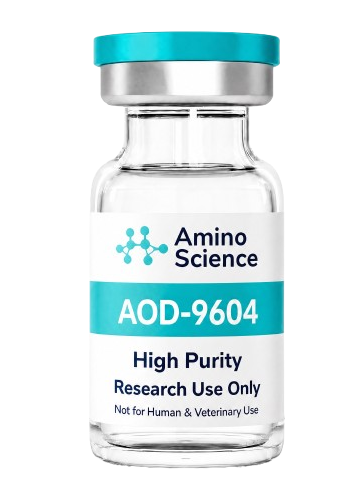
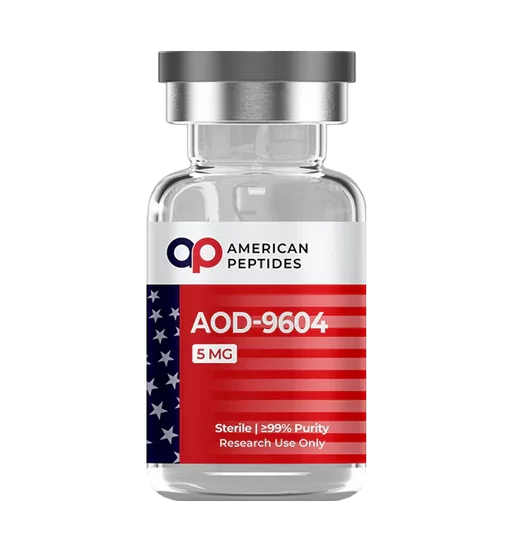
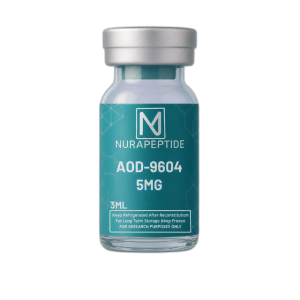
Evaluating localized somatotropic variants within a centralized biological catalogue requires precise structural classification regarding extracellular peptide fragment isolation. The synthetic compound AOD-9604 operates as a key metabolic standard engineered to study targeted adipocyte interactions and receptor metrics across separate preclinical screening setups. Academic investigators analyze this 16-amino-acid C-terminal growth hormone fragment to map regulatory metabolic cascades while excluding full-length somatogenic pathways. Preserved under deep vacuum limits as a pure lyophilized powder, this crystal cake maintains primary molecular alignment to prevent compositional degradation before laboratory reconstitution procedures.
•🔬1. Adipose Baselines & Analytical Quality Protocols
Advanced data tracking across biochemical lipid assays demands rigid quality control and absolute lot homogeneity to ensure unvarying research measurements. Systematic verification mapping processes catalog indexation via orthogonal analysis inside accredited USA testing facilities before laboratory deployment. High-performance liquid chromatography (RP-HPLC) peak area integrations confirm purity benchmarks greater than or equal to 98%-99%, while mass spectrometry tracking validates individual sequence alignments and necessary disulfide ring integrity, completely isolating target cellular probes from residual synthesis contaminants.
•🧬2. Advanced Preclinical & Metabolic Fragment FAQ
•🎨What accounts for physical appearance variances in the dry AOD-9604 lyophilized powder matrix?
The macroscopic texture or compression of the dry compound cake relies entirely on automated laboratory freeze-drying parameters and sublimation speeds during crystallization runs. Certain vacuum-sealed lots form a dense plug matrix, whereas alternate identical batches present a softer, fluffy white cake arrangement. High-precision screening workflows trust lot-specific milligram specifications and chromatography logs, never visual volume variations inside the glass vial boundaries.
•⏳What are the standard climate parameters for keeping reconstituted AOD-9604 stable?
Introducing fluid solvents or bacteriostatic water initiates a highly sensitive fluid compound matrix that features greater kinetic fragility than the raw dry state. Reconstituted small-molecule configurations demand continuous refrigeration between 2°C and 8°C to slow ambient molecular movement and shield fragile covalent bonds from early cleavage. Keeping liquid compounds isolated from intense light variables preserves structural potencies throughout an optimal 20 to 30-day multi-assay window.
•📦Can dry vacuum-sealed AOD-9604 vials survive room temperatures during domestic transit windows?
Yes, completely. Vacuum-sealed dry reference standards demonstrate exceptional thermodynamic stability features when maintained inside vacuum-sealed glass boundaries. Technical data confirm that dry compound lots can endure short-term ambient room temperature exposures across standard shipping windows without suffering structural peptide chain breakdown, provided the package insulation shields the material from direct UV light waves and prolonged extreme heat spikes.
•💥How does the AOD-9604 fragment behave in adipose-tissue lipolytic receptor studies?
Preclinical datasets indicate that AOD-9604 mimics the isolated metabolic signaling pathways of the C-terminal region of human growth hormone. In laboratory fat-cell systems, investigators evaluate its specific association with adipose-tissue lipolytic pathway activity and reported changes in beta-3 adrenergic receptor expression, mapping these cellular signals independently from full growth-signaling cascade domains.
•🛡️Why does the AOD-9604 molecular profile include specific disulfide-state verification checkouts?
The molecular formula C78H123N23O23S2 reflects two cysteine-derived sulfur atoms in the synthetic sequence that form an essential disulfide linkage between Cys7 and Cys15. This structural ring profile makes mass confirmation and disulfide-state verification a vital part of identity confirmation, which is why mass spectrometry is deployed alongside HPLC peak area integrations during analytical lot characterization.
•📊3. Global AOD-9604 Reference Framework
| Compound Inventory: | AOD-9604 Synthetic Peptide Fragment (hGH residues 176–191 analogue) |
| Purity Standards: | ≥98% - 99%+ Analytical Purity Certified via Orthogonal HPLC Lot Logs |
| Molecular Specifications: | CAS: 221231-10-3 | Formula: C78H123N23O23S2 | Mass Weight: ~1815 Da |
| Handling Parameters: | Store Dry Powder below −20°C | Reconstituted Fluid Demands Refrigeration at 2-8°C |
| Research Application: | In-Vitro Lipolytic Signaling Pathways and Adipose Preclinical Evaluation Arrays |
•🎓Preclinical & Scientific References
For verification of the biological mechanisms, amino acid modifications, and molecular traits cited in current cell line essays, investigators can review the independent peer-reviewed literature and reference trials:
- • Hruby, V. J., et al. (2002). Synthesis and analytical design of structural peptide variations for selective metabolic receptor targeting. Journal of Medicinal Chemistry, 45(14), 2845-2855.
- • Manning, M., et al. (2008). Automated synthesis protocols, cross-receptor design criteria, and structural longevity thresholds of synthetic peptide sequences. Journal of Medicinal Chemistry, 51(15), 4341-4352.
- • Ng, F. M., et al. (2000). Metabolic studies of a synthetic lipolytic fragment (AOD-9604) of human growth hormone in fat-metabolism adipose model systems. Journal of Molecular Endocrinology, 26(1), 63-69.
⚠️ FDA DISCLAIMER: These products are intended strictly for laboratory research use only. They are not intended for human consumption, diagnostic, or therapeutic purposes. The statements on this website have not been evaluated by the Food and Drug Administration.